


Frisson: The somatic response to music, and its relation to neurodivergence

If ever there was a clear example of a somatic response to an emotional cue, it is the phenomenon of ‘frisson’. The French word (meaning to shiver) describes somatic chills that occur when experiencing something evocative; typically a musical cue, although the response can also happen when connecting with art, architecture or something else that inspires awe, and brings unexpected joy.
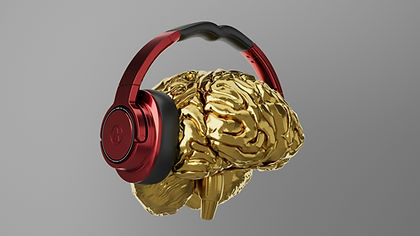
For people that experience it, frisson is described as a form of excitement; typically tingles, goosebumps, chills or an internal emotional experience, such as joy or euphoria. The scientific community refers to the phenomenon as ‘aesthetic chills’; and in the case of frisson, it is always a positive experience, as opposed to the very similar physiological experience that can occur in the face of high risk and danger.
Arousal spikes in the sympathetic nervous system
The process underpinning ‘frisson’ can be traced back to the autonomic nervous system’s sympathetic branch. The sympathetic arm of this involuntary system is responsible for ‘fight and flight’, and the body’s rection to stimuli. When a person experiencing frisson hears a rousing piece of music such as a moving crescendo, the sympathetic nervous system is momentarily activated, resulting in an arousal spike.

There has even been research showing that ‘musical chills’ may activate pathways (involving both increased and decreased blood flow to key brain regions) that align with the experiences of cocaine-dependent subjects (Schoeller, F. et al. 2024). Blood and Zatorre (2001) further identified a ‘craving’ response to frisson-inducing music that is similar to that experienced by drug users, describing “A dopaminergic anticipation – [the subject is becoming] slightly addicted to the musical stimulus.”
Frisson seems to be more prevalent in highly sensitive individuals, and given the fact that many neurodivergent people (who by virtue of their neurotype, are highly sensitive) experience an underactivity of dopamine in their brains, this could provide interesting insight into the high correlation between addiction, emotional reward and neurodivergence.

To explain further, functional MRI studies have shown that music that induces frisson activates emotional-processing brain regions involved in motivation, pleasure and reward. These areas include the amygdala and prefrontal cortex. Interestingly, the process of frisson is linked to prediction, or more specifically, the absence of a predicted pattern. For example, the delayed drop of a chorus that a club DJ artfully uses to ignite fervour in a crowd; or hearing a wonderful new artist for the first time. Sometimes, frisson can ensue from a joyous moment – a poignant lyric, or the joy of communal connection, for example at a gig. It also isn’t uncommon to feel teary when experiencing frisson; likely as the sympathetic energy in the body’s nervous system shifts.
Links with neurodivergence
The neurotransmitter dopamine is massively influential in the process of reward (Neurolaunch editorial, 2024), which may give us a hint as to why neurodivergent individuals could be susceptible to frisson – see below. There’s even been research on the links between dopamine release in the brain and how much participants would pay for pleasurable songs (Salimpoor et al., 2011; Ferreri et al., 2021).
What’s especially interesting about frisson however, is that it doesn’t seem to be universally experienced by all people. In fact, it seems that neurodivergent people, and those who are highly sensitive, are especially prone to experiencing frisson.

Neurodivergent individuals - for example, autistic folk, or those with ADHD or sensory processing differences - often experience the world through a heightened or atypical sensory and emotional lens. This can amplify responses to sound. Societally, this is seen as a negative experience, e.g. over sensitivity to sound leading to overwhelm – however in sensitive people, it is possible their hypersensitivity to auditory cues can also lead to the joyful and uplifting experience of frisson.
Where autistic people are concerned, the structural features of music, including patterns, rhythms and tonal predictability suit the autistic brain's affinity for structure. At the same time, the emotional expressiveness of music may allow for the processing of emotional experiences that can be difficult to express. For those individuals with ADHD, frisson may offer a pleasurable dopamine boost, and a conduit for transitioning into a ‘flow state’; seemingly because music can increase dopamine levels in the brain.
For anyone with what could be described as different neurological wiring, including otherwise neurotypical people who are just highly sensitive, perhaps the somatic reaction of frisson is simply a bridge between cognitive and affective (mood-based) experiences? Whatever the links, it is widely recognised that music has therapeutic benefits when trying to improve states like neurodivergent dysregulation, anxiety and low mood. (See 'Using music therapeutically', below.)
Synaesthesia

On the subject of neurodivergence, one interesting link between frisson and neurotype is synaesthesia. This is a neurological response whereby where stimulation of one sensory or cognitive pathway leads to automatic, involuntary experiences in a second sensory pathway (e.g., seeing colours when hearing music, or tasting words). Many musical performers have described experiencing synaesthesia, such as Billie Eilish, Kanye West, Lorde, Billy Joel and Charli XCX. It is widely regarded as a neurodivergent trait or response.
In synaesthesia, there's cross-activation between multiple brain areas (e.g., auditory and visual cortex areas). For individuals experiencing the auditory aspect of this phenomenon, a specific note in a song, or a musical or vocal timbre, might for example correlate with a colour, shape or taste. (“When I see a particularly vivid colour, a strong melodic, rhythmic pattern [usually] emerges at the same time,” states musician Billy Joel.)
So it seems likely that frisson and synaesthesia are somehow linked, in terms of neurological processes. Essentially they both represent strong emotional reactions to sensory input, suggesting overlap in brain pathways involved in emotion and sensory integration / processing.
Using music therapeutically

Listening to music is a great way to regulate the nervous system. For example, music with a strong rhythmic drive and a catchy, major-chord melody typically activates the brain’s pleasure and reward system, and subsequent dopamine release.
Slow, soothing music with a steady rhythm (such as relaxing binaural beats or ambient classical music) can lower heart rate, decrease blood pressure and lower cortisol levels, which all help to reduce stress and anxiety.
One of the most useful ways to utilise music is to listen to pieces that match your current mood – as opposed to, for example, listening to soft calming music in order to ‘calm down’, if you’re agitated. Listening to music that matches or expresses one’s current mood can help process emotions safely and promote catharsis, leading to better emotional regulation.
If you’re listening to music with other likeminded people, you will also find it enhances social and emotional connection – shared musical experiences stimulate oxytocin release, which fosters feelings of bonding and social connectedness; more important regulators of emotional wellbeing.
To conclude, if you are a person who experiences frisson, count yourself lucky, and treasure these unexpected, rewarding experiences. They’re undoubtedly good for body, mind and soul.
By Kathy Carter
References
Blood, A.J. and Zatorre, R.J. (2001) Intensely Pleasurable Responses to Music Correlate with Activity in Brain Regions Implicated in Reward and Emotion. Proceedings of the National Academy of Sciences, 98, 11818-11823.
Neurolaunch editorial (2024). Music and dopamine: The Neurochemical Symphony in your brain, NeuroLaunch.com. Available at: https://neurolaunch.com/music-and-dopamine/#google_vignette
Salimpoor, V. N., Benovoy, M., Larcher, K., Dagher, A., & Zatorre,R. J. (2011). Anatomically distinct dopamine release during anticipation and experience of peak emotion to music. Nature Neuroscience, 14(2), 257–262.
Schoeller, F. et al. (2024) ‘The neurobiology of aesthetic chills: How bodily sensations shape emotional experiences’, Cognitive, Affective, & Behavioral Neuroscience, 24(4), pp. 617–630. doi:10.3758/s13415-024-01168-x.
#music #therapistsconnect #hypnotherapy #ADHD #neurodivergence #autism #synaesthesia


Comments